Montag, 23. September 2013

Douarnenez Port Rosmeur

Working on the ports de Douarnenez le premier to emerge war Port Rosmeur


Aquarelliert sind die charakteristischen colours zu sehen:


This view emerged d'un serie von Fotos taken Avril 2012

Donnerstag, 1. August 2013

departure at sunrise


Revisiting the topic „Ausfahrt“, sortie, or “le matin”

the moment of passing the Leuchtturm with a linkskurve, the boat tilting to the right, here seen in the morning avec Cupidon II de Thierry Orvoën:

at sunrise, “joie des anges” (right) goes straight, while sich cupidon neigt. In the lino angles and dimensions have been slightly changed:

with a deuxième plate colours of the morning sun were introduced

 Thierry (“J'ai commencé avec mon père. J'ai repris ensuite un bateau plus petit il y a dix ans, car je ne trouvais plus sur l'île de matelots pour former un equipage”, see Les derniers pêcheurs groisillons, by Sophie Paitier - Le Télégramme, at the site de Defi 2009, http://www.magnautic.com/nautisme/info/defi-ports-de-peche-derniers-pecheurs-groisillons/4437) is one of the few Fischer left at Groix. See hier the crew (Erwan Dubois, Alber Goarin, Thierry Orvoen, Jean-MarcHess, Marc Carradec, PatrickSaigot et Loïc le Garrec ) winning the défi groisillon

The decline of fishery, especially coastal fishery is a complex topic avec different issues worldwide, including industrial developments and marine ecology. While in the 30 Groix had more than 300 boats, there remained about 30 in the 70s and now the number goes to 1%. See examples at Port Tudy in the 90s:

Cupidon, Cupido, Cupid or Amor, fils de Venus est le dieu de l’amour. One of the best representations and known is from William Bougereau, 1825-1905, (“Un peintre de la femme”), academic painter and traditionalist

 In a biographical sketch by Damien Bartoli and Fred Ross it is stated in the English version: After three quarters of a century in obscurity, all of the museums in the world that owned Bouguereau paintings, finally in the early 1980's realized what treasures they had. Today, over 100 museums around the world have placed Bouguereau paintings on permanent exhibit in their most prestigious galleries (at least those which had not been foolish enough to sell off their Bouguereau paintings earlier in the century when his work was being ridiculed and degraded by modernist pedagogues) (http://www.artrenewal.org/articles/On-Line_Books/Bouguereau_William/bio4.php)


His life has fascinating aspects, like the deaths of 3 of his 5 children and his first wife, and the late marriage with his American student and fellow painter Elizabeth Jane Gardner (1837-1922), see the joint expo 1984 of the museums Paris, Montréal and Hartford.
As an example see here the wave


The name cupidon or Amor have been used occasionally pour les bateau:


Also in the 1907 built Berlin Fahrgastschiff


Next time à Groix meet Thierry dans son shop at Port Tudy, quai sud


Dienstag, 11. Juni 2013

The new flyer 2013

the new flyer focuses on Concarneau

thanks to Hannes for invaluabel help. These prints are available at Galerie Gloux (http://www.galeriegloux-29.com/)

Samstag, 25. Mai 2013

Le grand cormoran revisited


Der zweite Druck des great cormo features ein graublaues Meer and a transparent body colour. While the water colour est imprimé fat, le bleu-gris de corpse is inked only leicht.


in anderen Versionen ist auch das Wasser dünn gedruckt

 
Remember le cormorant de de la Corniche, à Concarneau, du sculpteur Jean Lemonnier (*1950):


 in 2010  it has been repeindre en bleu, titled legrandbleu. 


The statue is close (ausser für den langen Hals) to the Kormoran study de Mathurin Méheut (1882-1958), peintre décorateur bretonne:


From the 2013 expo in Paris cited: D’origine bretonne, il songe à employer l’océan. Il séjourne deux années à la station biologique de Roscoff. Il réalise de nombreux croquis de la faune et de la flore marines démontrant une observation détaillée, minutieuse et scientifique. Il les publie sous la direction du peintre décorateur Maurice Pillard-Verneuil dans deux volumes intitulés : Etude de la mer.
See l’artiste au travail:


I located this impressive collection of about 500 illustrations (1913) at the library der Hochschule der Künste Berlin, see den Stempel “Koenigl. Kunstschule zu Berlin”, presumably before world war I:


A reedition in 2010 de Michel Glémarec, La biodiversité littorale vue par MM, provides Zugang zu dieser seltenen Edition


Some more Studien von Mathurin can be found in the web:


There remain 2 comments of Berlin cormorants: die Zahl der Kormorane in the area is rapidly shrinking. Fischer calculate the price of competition and the Landesfischereiverbande Brandenburg verhinderte 2010 in erlaubten Aktionen das Schlüpfen von fast 1000 Jungvögeln, in addition Waschbären go for eggs and Jungvögel.  Ein Kormoran visited the Berlin Eisbären, Knut still alive at that time, showed wenig Interesse. Der Vogel  zwickte ihn sogar in die Nase. Doch Knut-Gefährtin Giovanna habe nicht mit sich spielen lassen und zugeschlagen. The icebears had been fed before, but enfin l'oiseau a été consommé (BZ - Knut satt).


Sonntag, 19. Mai 2013

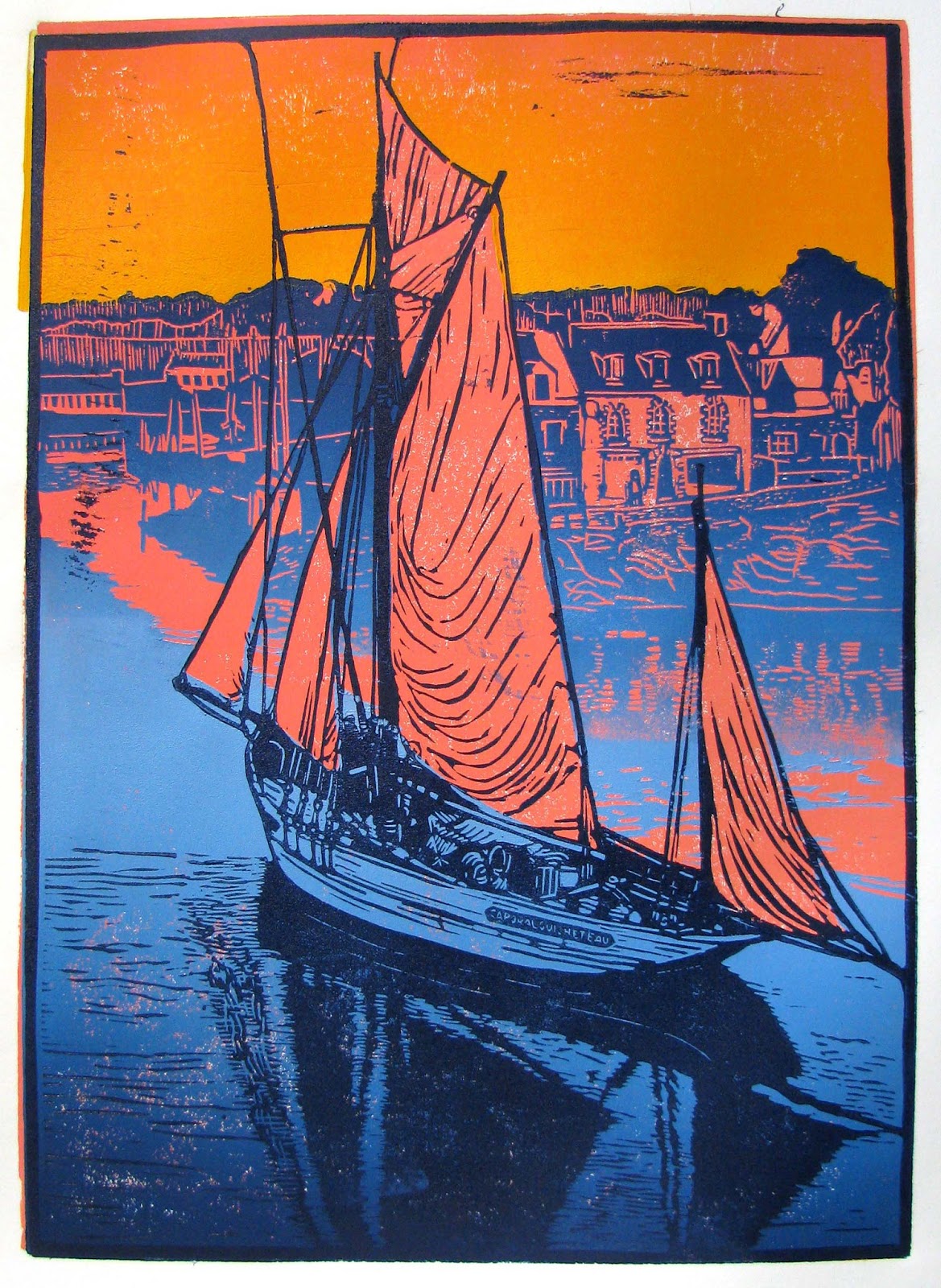
Caporal Guicheteau revisited


Le thonier from Concarneau has been discussed, http://hans-bretagne.blogspot.de/2012/04/caporal-guicheteau.html, with Alfred Guillous Porträt indicating his 1915 mort pour la France.  The 3rd Version of the bateau lino introduced a background Farbe (http://hans-bretagne.blogspot.de/2012/05/3rd-druck-de-caporal-guicheteau.html).  Que le bateau passait Lanriec je me suis souvenu le soleil du matin, together mit der Morgenröte,


et imprimé une 2013 version avec a 4th sky plate


note that here the two regions of plate 2 avec Lanriec et le bateau are inked with differently oriented gradients as in the earlier versions, with a hard dark Horizont vor der rising sun


Un autre morning brume atmosphere again has les deux similar oriented gradients, avec des dark ombres dans l’eau


Looking again at l’histoire, I made 2 unexpected Entdeckungen : le portait can be seen in the web, and a récemment été vendu (http://www.authentic-antiques.com/zoom_guillou_alfred_peintre_concarneau.html), see Le tableau dans son cadre doré d'origine.


The second question follows “décès : 04/11/1915, en 51 – Marne, Le Mesnil-lès-Hurlus”, was geschah in 1915, welche deutschen soldiers trafen in Le Mesnil-lès-Hurlus auf Eugène et son camerades? Searching „337e Régiment d’Infanterie de Réserve, du 137e R.I. de Fontenay-le-Comte“ J'ai remarqué que chaque régiment a en effet une histoire über alle Kriege, so auch Nr.337/137


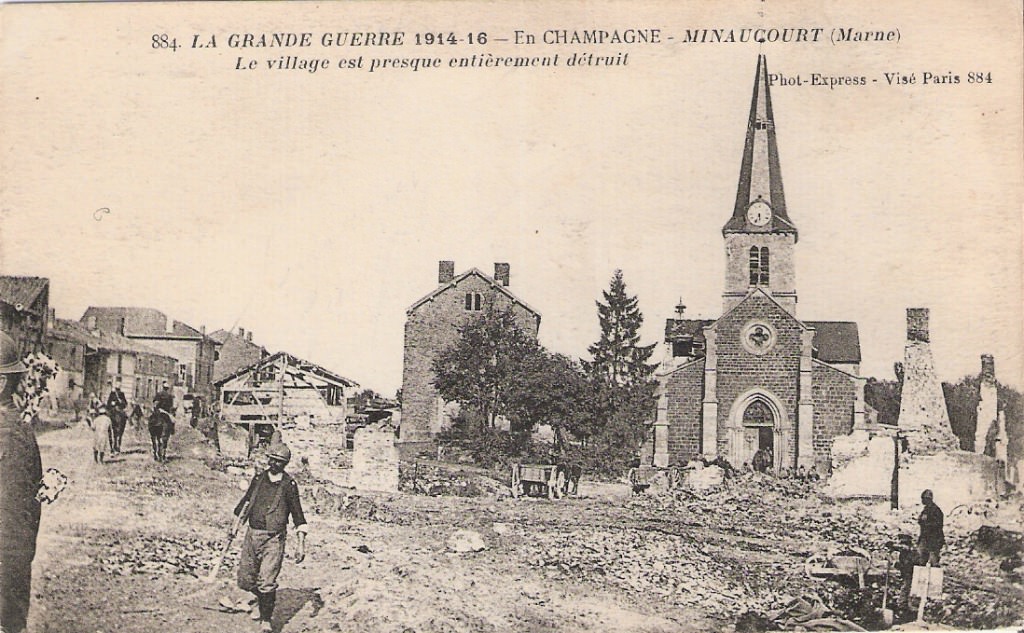
(http://fr.wikipedia.org/wiki/337e_r%C3%A9giment_d%27infanterie, http://fr.wikipedia.org/wiki/137e_r%C3%A9giment_d%27infanterie_de_ligne),  schon 1813 close to Berlin. Regarding 1915 : « Le 137° RI quitte la Somme en août 1915 pour la Champagne. Fin septembre il est dans la Marne et participe aux opérations sur Tahure. Fin septembre il est dans la Marne et participe aux opérations sur Tahure. Cette opération qui dure du 25 septembre au 9 octobre sera un échec et ne réussira pas à relancer l’offensive bien quelle ait couté aux français 140 000 morts ou blessés. Le 137° perd quant à lui 1200 hommes dont, pour la seconde fois, son chef de Corps le lieutenant-colonel BONNE.  Après remise sur pied et recomplètements dans la région de Chalons sur Marne, le régiment reprend ses positions sur Tahure – la Savate, où il passera son deuxième hiver de guerre 1915-16”. This does not give a clear idea of the events, but le village du Mesnil-lès-Hurlus, avec 97 habitants en 1911, fut anéanti in WWI. Il ne s'est plus jamais relevé, victime de cette guerre.
Hier die zerstörte Kirche:


Traces may be found even today, see


sapigneul.superforum.fr (Bat-Marne.14-18).
die Herbstschlacht in der Chamapagne (http://de.wikipedia.org/wiki/Herbstschlacht_in_der_Champagne et http://fr.wikipedia.org/wiki/Seconde_bataille_de_Champagne) is an extremely sad chapter of  the war. “La seconde bataille de Champagne est une bataille qui oppose du 25 septembre 1915 au 9 octobre 1915“, l‘offensive  française had been terminated already, et Eugène Guicheteau hatte die Marne fast überlebt.


Two days after Eugènes Tod, November 6, 1915, stellte die Entente die letzten Angriffe ein, da die Menschenverluste und auch der enorme Materialeinsatz mit fast 5,4 Millionen Granaten, welche allein in der Champagne verschossen wurden, in keiner Relation mehr zu den geringen Geländegewinnen standen.